
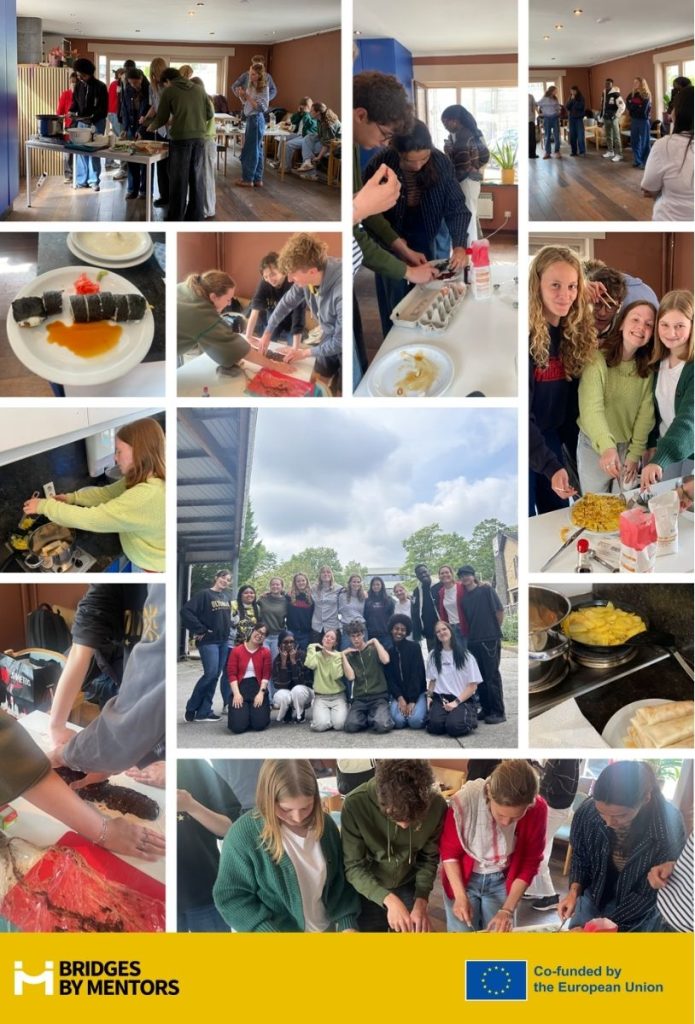
The cooking activity with the students from ’t Vier in Kortrijk was a very positive experience. In total, 8 mentors were present, together with 9 students from ’t Vier. Out of the mentors, 4 prepared a traditional dish from their home country. A student from Spain made Tortilla de patatas, a student from Japan made Sushi, a student from Romania prepared Salam de biscuiți, and a student from the Philippines made Turon.
At the start of the activity, random groups were made to decide which participants would join each cooking group. This helped create interaction between different people and encouraged everyone to work together. During the activity, participants were actively involved in preparing the dishes and learning more about the different cultures and recipes.
The atmosphere throughout the workshop was very positive. Everyone seemed to enjoy both the cooking process and tasting the different dishes afterwards. Some recipes included moments where participants had to wait for certain steps to finish. However, this created a nice opportunity for people to walk around, observe the other groups, ask questions, and interact with each other.
Overall, the activity was successful in bringing people together in an informal and enjoyable way. The workshop encouraged cultural exchange, teamwork, and social interaction between the mentors and students.